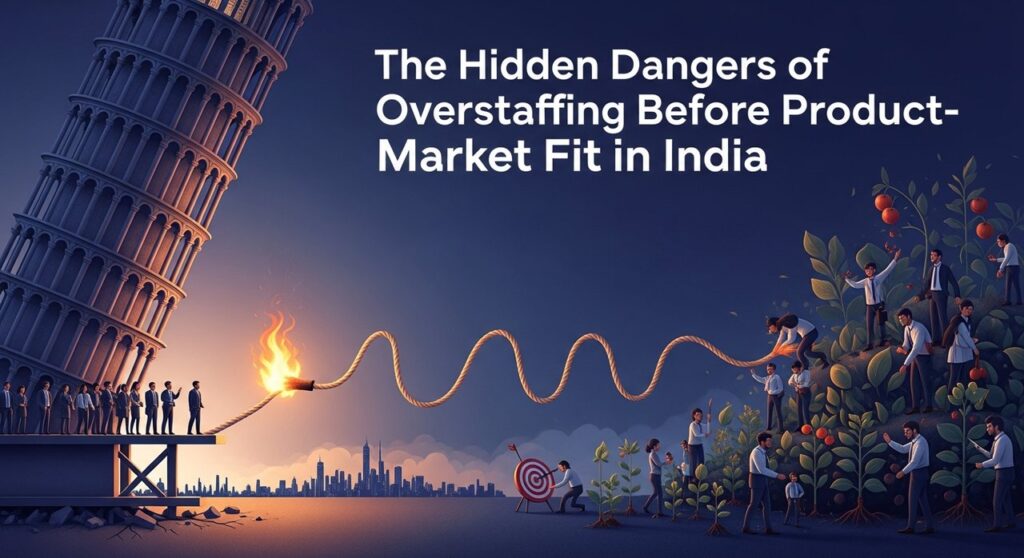
So you think hiring more people will solve all your startup problems? Think again. Overstaffing before achieving product-market fit is a silent killer of Indian startups. OfBusiness, one of the rare success stories, didn’t hire 100 people before knowing if their business model worked. They understood something most founders ignore: more employees don’t equate to more success. In fact, it can spell doom for your venture.
Why Overstaffing is a Financial Black Hole
The Cost of Idle Hands
Hiring too many people too soon drains your cash reserves faster than you think. You’re not just covering salaries; you’re also paying for benefits, office space, and operational overheads. Every rupee spent on an unnecessary hire is a rupee not spent on customer acquisition or product development. In a market where your competitors are lean and aggressive, overstaffing is a financial blunder you can’t afford.
Misplaced Priorities
Before you have product-market fit, every decision should focus on validating your core hypothesis. Overstaffing shifts the focus from customer feedback loops to internal management. You drown in HR issues and lose sight of what really matters: your product and your customers. You’re building an empire without knowing if your kingdom will last.
Startups that overstaff before product-market fit are like a ship setting sail without knowing if the ocean is even there.
Overstaffing Leads to Cultural Erosion
Team Dynamics Go South
With too many cooks in the kitchen, team cohesion suffers. In a startup, everyone needs to be a jack of all trades. When you overstaff, you dilute this necessity, leading to a lack of accountability and a culture of complacency. The team no longer hustles; they wait for someone else to take the lead.
Innovation Takes a Backseat
A bloated workforce stifles creativity and agility. Decision-making becomes slow as you navigate layers of unnecessary bureaucracy. Startups thrive on being nimble. When every decision requires a dozen approvals, you lose your edge.
Operational Inefficiencies Multiply
Coordination Chaos
More employees mean more meetings, more coordination, and more managerial headaches. You’re left managing people instead of managing your product and market. This inefficiency is a luxury you can’t afford when you’re still scrambling to find your footing.
Unnecessary Complexities
Complexity should be the enemy, not a goal. Overstaffing introduces complexities that bog down operations. Processes become cumbersome, and your startup loses its agility. In a rapidly changing market, being slow is a death sentence.
When to Really Start Hiring
Focus on Product-Market Fit First
Until you’ve nailed product-market fit, keep your team lean. Use every resource to validate your market and refine your product. If you’re unsure about what product-market fit really means, read this to save yourself from expensive mistakes.
Hire for Scalability, Not Vanity
Once you’re sure of your market, hire strategically to scale. Focus on roles that directly contribute to growth, sales, customer support, and technology. Each hire should have a clear ROI and a direct line to revenue generation.
Hire when you have a clear path to revenue, not when you have cash in the bank.
The Bottom Line
Overstaffing before achieving product-market fit is a costly misstep that can ruin your startup. It drains finances, dilutes culture, and introduces inefficiencies that are hard to undo. The leaner you are, the more agile and focused you remain. Don’t let unnecessary hires sink your ship before it even leaves the harbor.
FAQs
What is product-market fit?
Product-market fit is when your product satisfies a market demand sufficiently for sustainable growth. It’s the holy grail every startup needs to achieve before scaling.
How do I know if I’m overstaffed?
If you’re spending more time on internal management than on product development and customer feedback, you’re likely overstaffed. Also, if your burn rate is unsustainable, it’s a red flag.
Why is overstaffing common among Indian startups?
Many founders equate headcount with success and believe that more employees mean faster growth. It’s a misguided notion fueled by peer pressure and investor expectations.
Think you’re ready to scale but afraid of making costly mistakes? Reach out to Malpani Ventures for honest, actionable advice grounded in experience. We’re here to mentor you, not just fund you.