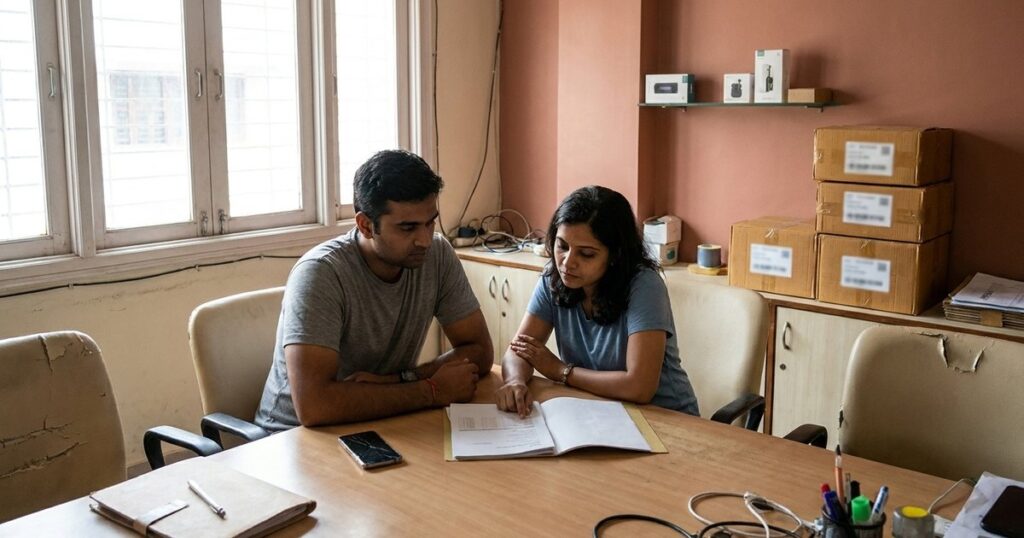
Indian SaaS founders reviewing customer retention and churn benchmarks in a warm Bengaluru office
Insights

Churn Benchmarks for Indian SaaS: What Good Looks Like

A good SaaS churn benchmark in India is not one magic percentage. For a self-serve product selling to small businesses, 3–5% monthly logo churn may be survivable. For an enterprise SaaS product with annual contracts, even 10% annual revenue churn is a serious warning. For a seed-stage company, gr…

Insights

GST for SaaS Startups in India: A Practical Guide

GST for SaaS in India is not a bookkeeping detail. It can decide whether your first enterprise customer signs, whether your export invoices are clean, and whether a cash-starved startup gets its input tax credit or loses it. The basic rule is simple: Indian SaaS sales usually attract 18% GST; exp…

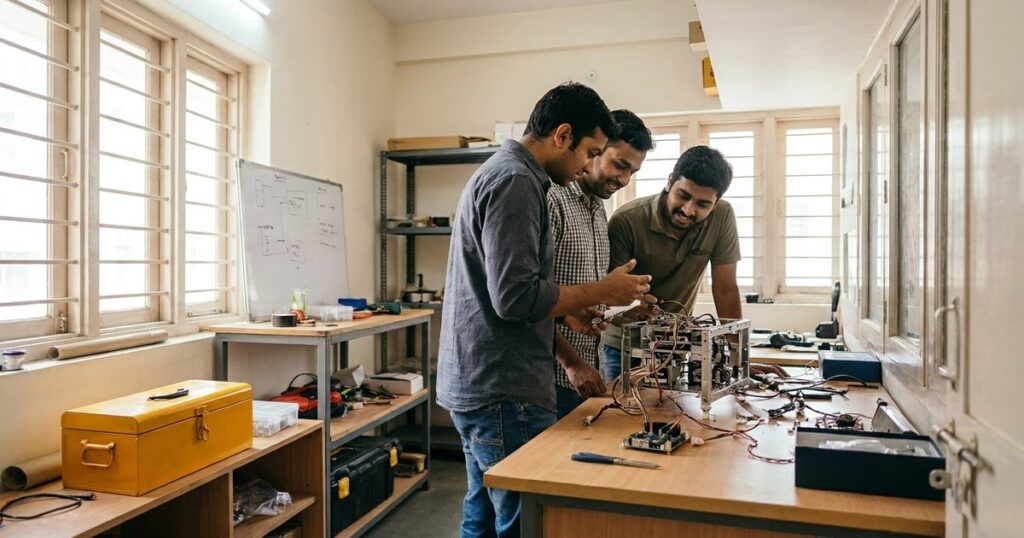
Indian startup founders choosing their first employees around a product prototype in a Bengaluru workshop
Insights

Hiring Your First 10 Employees in India

Most Indian founders hire their first 10 employees in the wrong order. They hire a senior “strategy” person before they have repeatable sales, a full-time HR manager before they have 15 people, and three engineers before they know which product customers will pay for. Then they blame the talent m…

Indian startup founders reconcile legal records during a cap table review
Insights

How to Run a Cap Table Review

Most Indian founders do not have a cap table. They have a spreadsheet that looks like one. That distinction becomes expensive when you raise your seed round, issue ESOPs, close a co-founder exit, or face diligence. A proper cap table review in India means reconciling your company’s legal records,…

Indian startup founders weigh bootstrapping versus raising capital in a modest workspace
Insights

Bootstrapping vs Raising: How to Decide

If you are asking “should I bootstrap or raise for my startup?”, the default answer is: bootstrap until external capital clearly changes the outcome . Do not raise because investors showing interest feels like validation. Raise when money lets you capture a market, meet a regulatory or working-ca…

Indian startup engineer examining a prototype in a scene about sweat equity agreements
Insights

Sweat Equity Agreements in India

In India, sweat equity is not “free shares for helping out”. It is a regulated share issue under Section 54 of the Companies Act, 2013. It is generally available to a company’s directors or employees in exchange for know-how, intellectual property, or measurable value addition—not to every consul…

Indian startup founders discuss product-market fit with an early customer in a business workspace
Insights

Product-Market Fit for Indian Startups: How to Know

In India, product-market fit is not when 10,000 people download your app. It is when a narrow group of customers keeps paying, stays, refers others, and does so without your founder personally pushing every sale. That is the practical meaning of product-market fit in India . If your growth stops …

Insights

ESOPs for Early Employees in India

ESOPs for early employees in India are not a substitute for salary, and they are not free money. They are a contract: you give an employee the right to buy shares later at a fixed price, subject to vesting, tax, and a liquidity event. Used properly, ESOPs help you hire people who can change the c…

Indian founder having a candid strategy discussion with two advisors in a bright startup office
Insights

Building an Advisory Board in India

Most Indian founders do not need an advisory board. They need two honest conversations, better customer data, and the discipline to act on uncomfortable feedback. An advisory board for a startup in India is useful only when it solves a specific problem that you cannot solve through hiring, custom…

Scroll to Top