
Lessons on consistency, sales and judgment from Manicule’s young founders.
Naman Bansal and Shreyans Jain got into Y Combinator before turning twenty. It is the first detail most people notice about the founders of Manicule, and it is easy to see why. Age is often used as a shorthand for experience, so teenage founders in YC sound like an exception that needs explaining.
Their age explains less than it initially seems to. Their answers were practical and sometimes surprisingly ordinary. They talked about long days on their laptops, years spent building before Manicule and a sales process that involves fewer than ten carefully chosen emails each week.
The clearest pattern was how selective they had become about where to spend their time. No single tactic explained their progress.
Manicule is an AI-native technical documentation and DevRel studio backed by Y Combinator. It builds, rewrites, and manages technical documentation, blogs, product videos, and developer content end-to-end for early-stage developer tool companies, optimized for both human developers and AI coding agents.
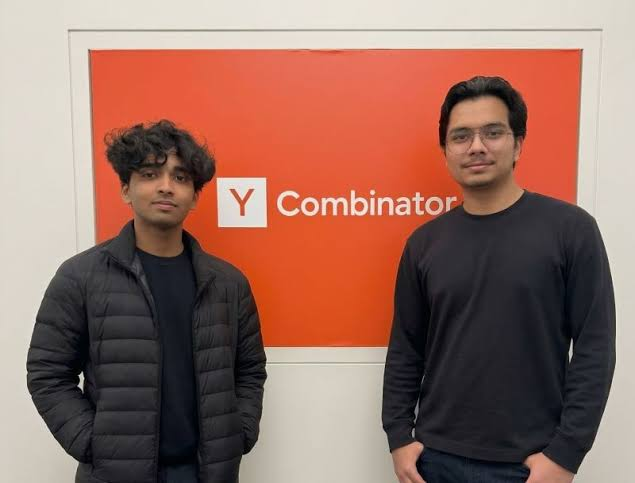
They have been doing this longer than their age suggests
People often assume that being young helps founders. They have more energy, fewer commitments and more freedom to take risks. Naman and Shreyans said the reality is usually harder. Customers and investors can be more doubtful when the person across the table is nineteen.
The useful part of starting young is the extra time spent practising. Someone who began building at fourteen may still be a teenager, but they have already had years of feedback from users, customers and failed ideas. That experience does not always show up in a bio.
Those early attempts matter because judgment develops through contact with reality. You ship something and nobody uses it. You write a pitch that sounds convincing to you and gets ignored. You watch a customer struggle with the part of the product you thought was obvious. Each mistake makes the next decision a little better informed.
A better reason to start early is the chance to enter a useful feedback loop before you feel completely ready, rather than chasing impressive achievements before a certain birthday.
YC looked a lot like work
YC can seem glamorous from the outside. There are famous partners, ambitious founders and the promise of rapid growth. Their description of the experience was much simpler.
They summed up YC as 14 hours a day on their laptops.
They noticed that many of the strongest founders could keep working on the same problem for a long time. They would repeat an action, look at the result, make an adjustment and try again. Some companies pivoted during the batch, but the founders they admired were often the ones who had stayed with a problem long enough to understand it properly.
That sounds obvious when written down. In practice, the middle of a project can be uncomfortable. The excitement has faded, progress is difficult to measure and a new idea offers the relief of starting fresh. A pivot may be the right call, but it can also interrupt the learning that only appears after sustained effort.
Persistence here means keeping the problem in view while the tactics change, without becoming blindly loyal to an idea. That takes a certain emotional steadiness. Motivation comes and goes, while the work still needs to continue.
Their sales process starts before the email
Naman handles sales and spends about a quarter of his time on it. Even so, he sends no more than around ten outbound emails in a typical week.
The small number makes sense once you hear how he chooses recipients. Manicule looks for companies that resemble customers who have converted in the past. They check for signs that the problem is urgent and that the company may be ready to buy. Only then does Naman write a message and shape the offer around that person.
Most outbound teams use replies to discover whether a lead was relevant. Manicule tries to answer that question first. This makes each email slower to prepare, but it also gives the response more meaning. A positive reply tells them something about the customer profile and the offer, rather than simply rewarding a large send volume.
Software helps with lead discovery and research, leaving Naman to write each message himself. He enjoys finding the detail that makes an email specific, and he does not want the final message to sound generic.
They automate the search, context gathering and pattern spotting. Before anything reaches a customer, Naman reviews what they found and decides how to use it. Saving time on research gives him more room to be careful at the final step.
They publish for people who may already want the product
Manicule uses X because many of its ideal customers are already there. Its founders mainly publish case studies and other content aimed at people who are close to booking a call.
This is different from trying to build the largest possible audience. A broad educational strategy can work, but it takes time to turn attention into demand. Manicule publishes proof for buyers who already understand the problem and need confidence that the team can solve it.
A case study answers questions about results. A technical teardown shows that the team understands the work. A comparison helps a buyer decide whether the service fits their situation. Thinking about content this way gives every piece a job beyond attracting impressions.
For an early company, this can be more useful than posting frequently for its own sake. Look at the questions customers ask before buying, then publish material that answers those questions well.
AI has made their judgment more important
The founders use agents for a large part of their customer work and for researching sales prospects. At the same time, they care closely about the final writing. Naman still handles his sales emails because he can notice something about the recipient and write around it.
AI can produce plenty of options. It can suggest subject lines, draft an article or assemble a list of leads in seconds. The harder part is deciding which option belongs in the real world. Someone has to recognise whether a line sounds natural, whether an example is accurate and whether a message is worth sending.
The founders mentioned technical writing that is short while still giving the reader a real understanding of the subject. That standard is difficult to automate because it relies on knowing what the reader needs and what can safely be left out.
They also pointed out that more information is now summarized before readers encounter it. This makes first-hand information more valuable. Customer conversations, product usage and original experiments produce material that has not already been flattened into the same summary everyone else sees.
The practical takeaways
It would be easy to reduce Manicule’s story to long hours and unusual ambition at a young age. Those things are part of it, but they are difficult to copy and not especially useful as advice.
The practical part is visible in the way they work each day. They started getting feedback early and give problems enough time to teach them something. They use automation for repetitive research, then pay close attention when a decision reaches another person. Their content answers questions that customers actually ask, and their own judgment stays close to the work.
Their recent progress sits on top of years of quieter work. Long before their age became a headline, they were already used to building, selling and learning from what happened.
If you want to be able to interact with bright founders like these, please check out Proxima Mumbai.