
Part 8 of 17 in The Founder’s Compass← Part 7Part 9 →
The Founder's Compass examines how differences in language, income, connectivity, family structure, regulation, climate and local habits shape product use in India. This chapter helps teams choose a reachable group, observe its context and adapt products without creating a separate version for every segment.
- Treat differences across India as part of the market, not noise around an average customer.
- Start with a specific place, job or community to create a reachable group and learning context.
- Observe customers in their environment, including device access, data limits, voice needs and family influence.
- Examine who produces, holds bargaining power, bears variability and captures margin in the value chain.
- Test one assumption by assigning an owner, setting a date and taking a small action to learn.
Design for diversity
Language, income, connectivity, family structure, regulation, climate and local habits shape how people discover and use a product. These differences are part of the market, not noise around an average customer.
Begin with a place, job or community: independent pharmacies in a district, first-time exporters in a manufacturing cluster, or parents navigating a school transition. This gives the team a reachable group and context in which to learn.
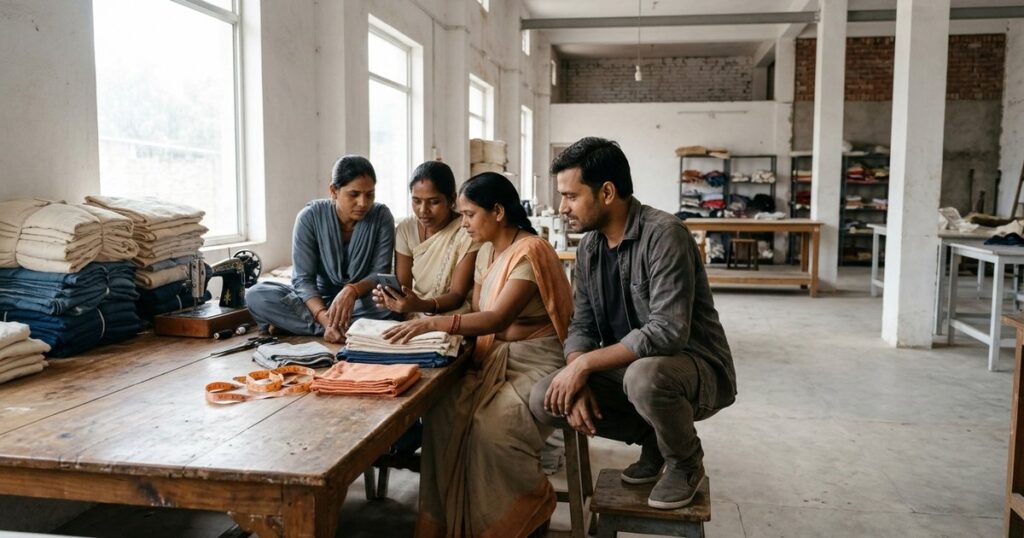
Observe customers in their environment. Does the product assume a private smartphone? Does video fail on limited data? Would voice fit better than a long form? Does a family member influence the decision? These are product questions.
Jaipur Rugs is often discussed for connecting artisan communities with global markets. Examine the value chain: who produces, who has bargaining power, who bears variability and who captures margin. Serving India includes attention to the people who make the service possible.
Local adaptation does not mean a separate product for every segment. Learn which differences change outcomes and can be addressed through modular design, partners, language options or service choices.
Spend a day where the work happens. Map decision makers, constraints, trusted intermediaries and failure points. Record what your assumptions missed.
Put it to work
In your next team meeting, name one assumption connected to this chapter. Ask what you have observed, what else might explain it, and what small action would help you learn. Assign an owner and a date to revisit the answer.
Frequently asked questions
How should a team design a product for different Indian markets?
Start with a specific place, job or community, then learn which differences change outcomes. Address them through modular design, partners, language options or service choices.
Why should teams observe customers in their environment?
Observation can reveal product questions, such as whether customers have private smartphones, limited data, a preference for voice or family members influencing decisions.
What should a team examine in a product value chain?
Examine who produces, who has bargaining power, who bears variability and who captures margin. Serving India includes attention to the people who make the service possible.
What exercise can a team use after reading this chapter?
Name one assumption, ask what has been observed and what else might explain it, then choose a small action. Assign an owner and a date to revisit the answer.