
Part 6 of 15 in Stress Management for Indian Founders: A Practical Guide to Completing the Stress Cycle, Recovering Properly, and Building Without Burning Out← Part 5Part 7 →
This chapter explains how deliberate rest, deep play, and sleep support better decisions and sustainable cognitive performance. It helps Indian founders protect recovery while handling family obligations, social expectations, and multi-generational households.
- Rest works alongside work and includes sleep, exercise, hobbies, social connection, and deep play.
- Founders should target seven hours of sleep and protect a fixed lights-out time.
- A phone cutoff, no late work discussions, and a 10-minute wind-down support better sleep.
- Deep play can include sport, cooking, non-business reading, music, or family activities without work talk.
- This week, test a phone cutoff for five days and protect one 30-minute non-work block.
Alex Soojung-Kim Pang argues that rest is not the opposite of work; it is a partner to work. The most productive and creative people treat rest with the same seriousness as work. This includes sleep, active rest (exercise, hobbies, social connection), and deep play, activities done for their own sake rather than for an outcome.
In the Indian context this collides with family obligations, social expectations, and the practical reality of multi-generational households. Successful adaptations reframe rest as part of the professional job rather than a personal indulgence. The language matters: “I need this time to make better decisions for the company” lands differently with family than “I need a break.”
Sleep Protocol (Non-Negotiable)
- Target 7 hours. Track for one week with a simple note or phone.
- No work WhatsApp or email after a fixed time (example: 9:30 or 10 p.m.). Put phone in another room.
- 10-minute wind-down: breathing, light stretch, or non-work reading.
Sleep remains the highest-leverage recovery tool available. Many Indian founders chronically under-sleep. Protecting seven hours is non-negotiable for sustainable cognitive performance. One practical rule used by several founders: no work discussions after 9:30 p.m. and a fixed lights-out time.
Deep Play Options That Work in Indian Homes
- Weekend cricket, badminton, or walking with friends who are not founders.
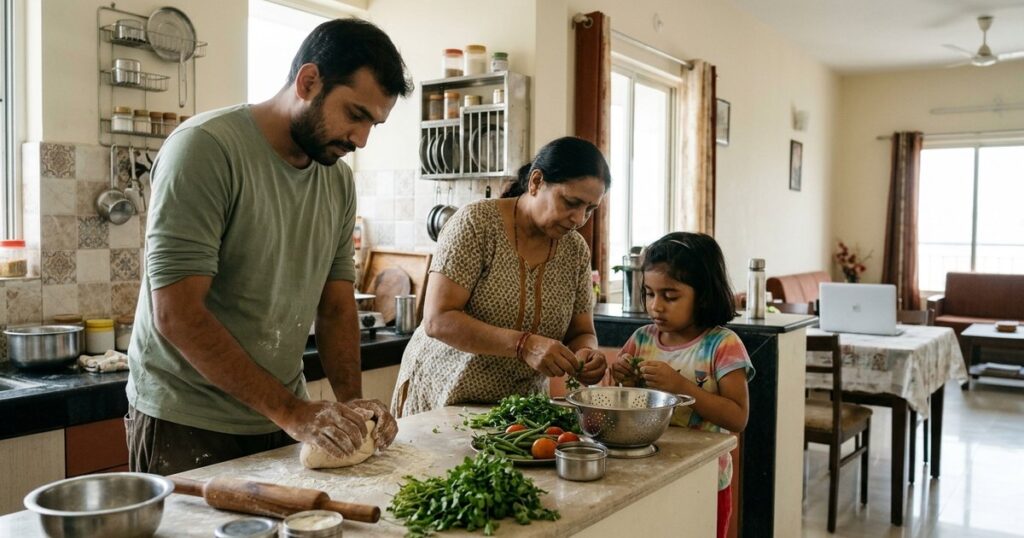
- Cooking a full meal without the laptop in the kitchen.
- Non-business reading or music for 30-45 minutes.
- Family activity that is not logistics (game, outing, temple visit without work talk).
A Delhi-based fintech founder tells her parents and in-laws that Sunday mornings are thinking time and protects them. Another Bangalore founder joined a weekend running group primarily because the social run is the only consistent window in which his mind fully leaves the company. A Hyderabad SaaS founder treats cooking a full Sunday lunch for the family as both family duty and active rest, no laptop in the kitchen.
This Week’s Experiment
- Set a phone cutoff time and keep it for 5 days.
- Protect one 30-minute deep-play or non-work social block.
- Note sleep quality and morning decision clarity.
Frequently asked questions
How much sleep should Indian founders get?
The chapter recommends targeting seven hours of sleep. It describes sleep as the highest-leverage recovery tool for sustainable cognitive performance.
What is a practical sleep protocol for founders?
Track sleep for one week, stop work WhatsApp and email after a fixed time, put the phone in another room, and use a 10-minute wind-down.
What are examples of deep play for founders?
Examples include weekend cricket, badminton, walking with friends, cooking without a laptop, non-business reading, music, and family activities without logistics.
How can founders explain protected rest time to family?
Reframe rest as part of the professional job. Saying, "I need this time to make better decisions for the company" may land differently than saying, "I need a break."