
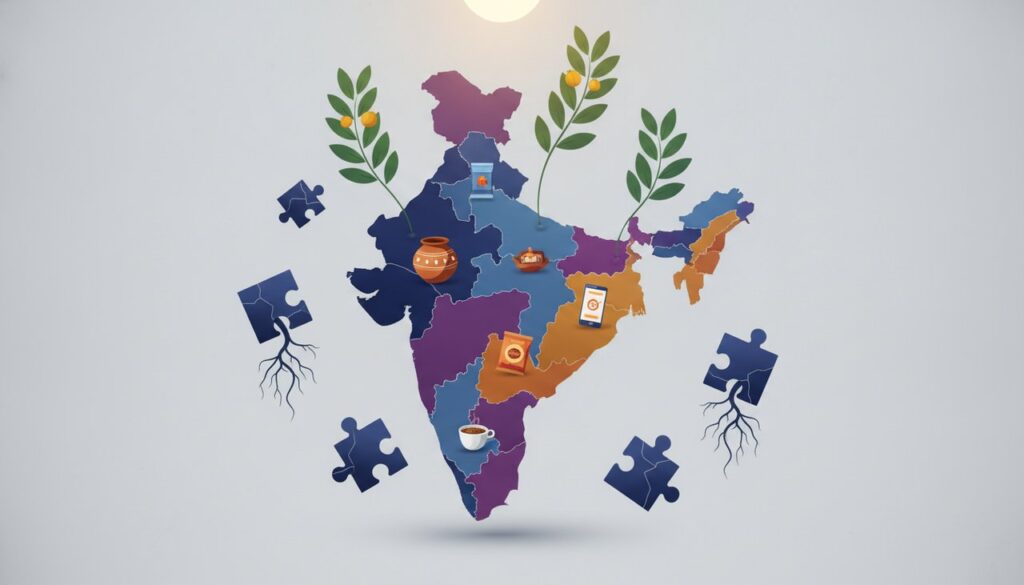
You’re running a startup in India, struggling to gain traction, and it’s clear why. You’re ignoring the elephant in the room: India’s regional diversity. Most founders are myopic, assuming a one-size-fits-all approach will work. It won’t. The harsh reality is that ignoring regional diversity in Indian consumer needs is a surefire way to burn through your cash without seeing a return. Let’s break down why this oversight is a fatal flaw and how you can course-correct before it’s too late.
The Myth of a Homogeneous Indian Market
One Market, Many Indias
First, dispel the myth that India is a single, homogeneous market. It’s not. With 28 states and over 700 districts, each with its own language, culture, and consumer behavior, India is a mosaic of diverse consumer needs. Take the case of McDonald’s in India. They didn’t just slap a McAloo Tikki on the menu for fun. They understood that vegetarianism is prevalent in many regions, and aligning with local dietary habits was crucial for their success.
Why Your Generic Strategy Will Fail
When you ignore regional differences, you’re effectively ignoring your largest asset: the Indian consumer. Your marketing budget is being wasted on strategies that don’t resonate. You risk alienating consumers who don’t see themselves reflected in your product. If you’re not accounting for regional tastes and preferences, you’re just guessing. And guessing is expensive. Just ask any startup founder who’s seen their runway evaporate because they failed to tailor their product to meet local needs.
Ignoring regional diversity is not just a missed opportunity; it’s a guaranteed path to failure.
Concrete Steps to Embrace Regional Diversity
Conduct Regional Fieldwork
It’s time to get your hands dirty. Fieldwork is your best friend when it comes to understanding diverse consumer needs. You need boots on the ground, interacting with consumers in their own environment. This is not about sending a survey and hoping for the best. It’s about immersive research that uncovers the motivations and emotions driving consumer behavior. Brands like Paper Boat thrived because they tapped into the nostalgia for traditional drinks, which they discovered through extensive fieldwork.
Leverage Local Partnerships
You’re not an expert in every region of India, and you don’t have to be. Partner with local experts who can provide invaluable cultural insights. They can help you navigate linguistic and cultural nuances, ensuring your product or service resonates with local consumers. These partnerships are not just beneficial; they’re essential. Brands that have successfully localized often have a network of regional collaborators guiding their strategies.
Segment Your Market Regionally
Stop treating India as a monolithic entity. Segment your market based on regional preferences. This goes beyond just language. For instance, culinary tastes vary dramatically between North and South India. Mustard oil might be a staple in the East, while coconut oil is preferred in the South. Understanding these differences allows you to tailor your offerings more precisely, increasing your product’s relevance and appeal.
The Bottom Line
Ignoring regional diversity in India is not just a strategic oversight; it’s a fatal flaw. To succeed, your startup must embrace the complexity and richness of India’s diverse consumer landscape. This isn’t just about adapting; it’s about thriving in a market that’s as varied as it is vast. Tailoring your approach to meet regional needs is not optional; it’s essential.
FAQs
Why is regional diversity so crucial for Indian startups?
India’s market is incredibly diverse with significant cultural, linguistic, and economic variances across regions. Ignoring this diversity leads to missed opportunities and inefficient use of resources.
How can I start incorporating regional diversity into my business strategy?
Begin with thorough fieldwork to understand regional consumer needs. Partner with local experts and segment your market to tailor your offerings effectively.
What are some successful examples of startups embracing regional diversity?
McDonald’s with its McAloo Tikki and Paper Boat’s traditional beverages are prime examples. Both brands adapted their offerings to meet regional preferences, leading to significant success.
How can ignoring regional diversity impact my startup’s finances?
Ignoring regional diversity can result in wasted marketing budgets, poor product-market fit, and ultimately, a short runway. Your resources are better spent tailoring your strategy to meet diverse consumer needs.
At Malpani Ventures, we understand the intricacies of the Indian market and can guide you through the complexities of regional consumer needs. Reach out if you’re ready to make the changes necessary for success in this diverse market.