November 2026

Indian founder separates invoice folders from a nearly empty wallet on a home dining table.
Insights

Cash Flow Is Oxygen

This chapter explains why unpaid invoices can leave a business unable to pay salaries, even when profits appear on paper. It helps founders improve cash visibility, test customer payment behaviour and allocate limited resources with discipline. Quick Summary Forecast collections weekly and keep i…
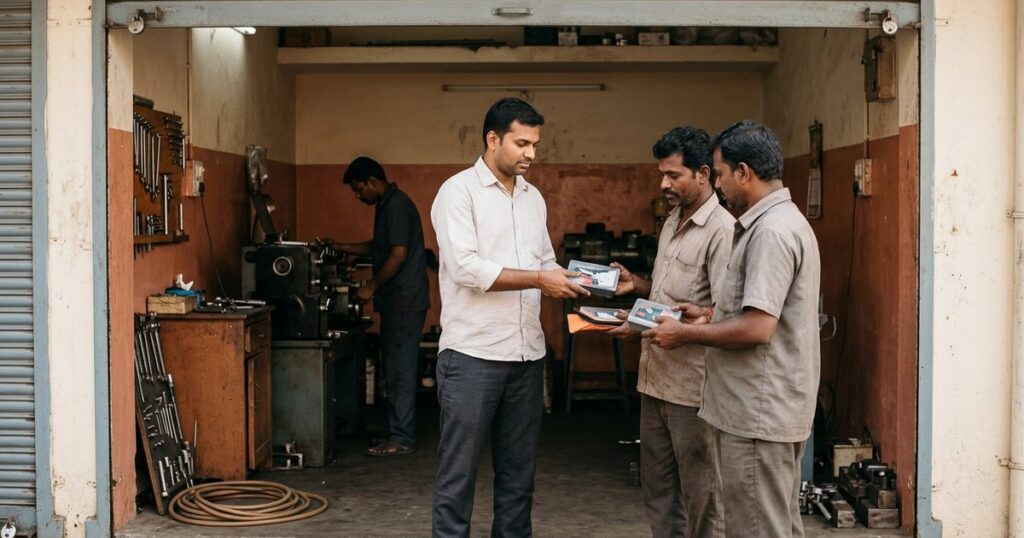

Coimbatore machine-shop founder offers two paid maintenance packages to factory customers.
Insights

Price Before You Polish

This chapter explains why founders should test a price before perfecting a product or seeking more funding. It helps Indian startup founders use small, measurable experiments to learn what customers value and what the economics look like. Quick Summary A price tests customer value; it is not a re…

An Indian founder observes three early customers trying sample kits in a bright bus terminal.
Insights

Find the First Ten True Customers

This chapter explains how to learn from a small group of committed customers before spending heavily on growth. It helps founders test customer needs, delivery work and business economics through a focused seven-day experiment. Quick Summary Ten committed customers can teach more than ten thousan…

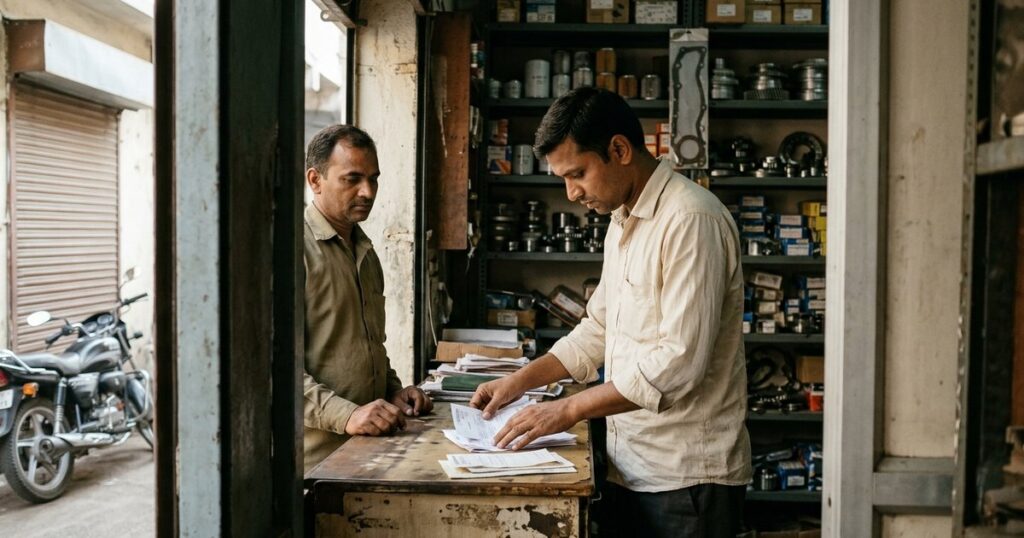
Founder manually matches blank invoices to payment slips for an auto-parts customer at a shop doorway.
Insights

Solve a Painkiller Problem

The Crorepati’s Shoestring explains how founders can test whether customers will pay to remove a recurring problem before spending heavily on products, hiring or tools. This chapter helps founders use small field experiments, direct observation and careful measurement to learn what customers valu…

Indian founder hands a tiffin to a customer during a small courtyard pre-order test.
Insights

The ₹10,000 Experiment

The Crorepati’s Shoestring examines how founders can use small, measurable experiments to learn what customers value and what an idea costs to deliver. It helps Indian founders test assumptions before spending heavily on tools, consultants, hiring or branding. Quick Summary A useful experiment pr…

Indian founder hand-packs ten sample parcels on a Jaipur terrace for a low-cost delivery test.
Insights

Constraints Make Better Questions

The Crorepati’s Shoestring examines how a smaller budget can lead founders to ask sharper questions before spending heavily. This chapter helps founders test customer needs, delivery, costs and assumptions through small, observable experiments. Quick Summary A smaller budget can reveal what custo…

Indian founder compares fabric samples with a supplier in a clean textile workshop.
Insights

Bootstrapping Is a Strategic Choice

This chapter explains bootstrapping as a strategic choice for founders deciding how to fund and shape a company. It helps founders test customer needs, costs and priorities before making irreversible commitments or accepting external capital. Quick Summary Bootstrapping can preserve control over …

Founder observes a distributor process a paid order at a Pune street counter.
Insights

Start With a Customer, Not a Pitch Deck

The Crorepati’s Shoestring argues that founders should seek customer evidence before seeking funding or polishing appearances. This chapter helps founders test demand through direct observation, small paid experiments and careful measurement. Quick Summary A stranger’s payment provides stronger e…

Founder and warehouse worker inspect returned delivery crates beside packed parcels.
Insights

The frugal founder’s oath

The Crorepati’s Shoestring presents a frugal founder’s approach to building a business with clear evidence and careful spending. This chapter helps founders distinguish meaningful business signals from funding, downloads and revenue alone. Quick Summary Judge progress through invoices, renewals, …

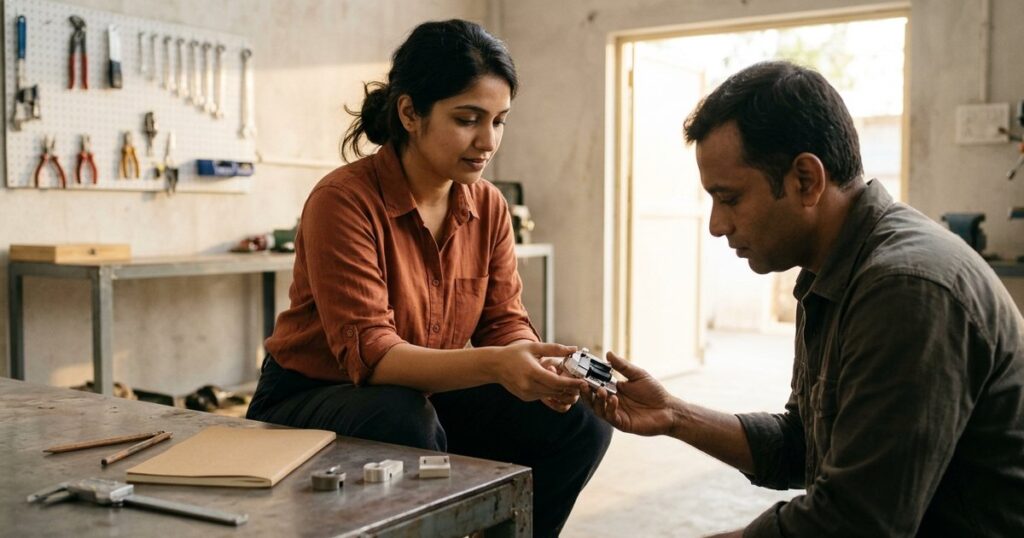
Indian founder tests a prototype with a customer at a clean workshop table.
Insights

How to use this book

The Crorepati’s Shoestring explains how to work through its chapters by testing ideas, recording observations, and staying responsible. It helps readers use experiments, customer feedback, constraints, and AI without treating fundraising as the main measure of progress. Quick Summary Read one cha…

Scroll to Top