November 2026

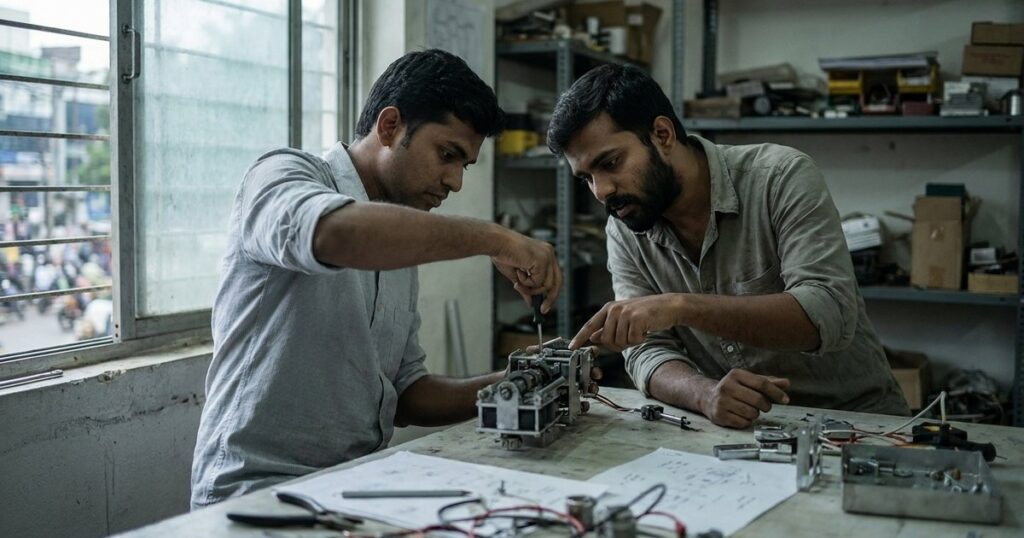
Indian startup founders weigh bootstrapping versus raising capital in a modest workspace
Insights

Bootstrapping vs Raising: How to Decide

If you are asking โ€œshould I bootstrap or raise for my startup?โ€, the default answer is: bootstrap until external capital clearly changes the outcome . Do not raise because investors showing interest feels like validation. Raise when money lets you capture a market, meet a regulatory or working-ca…
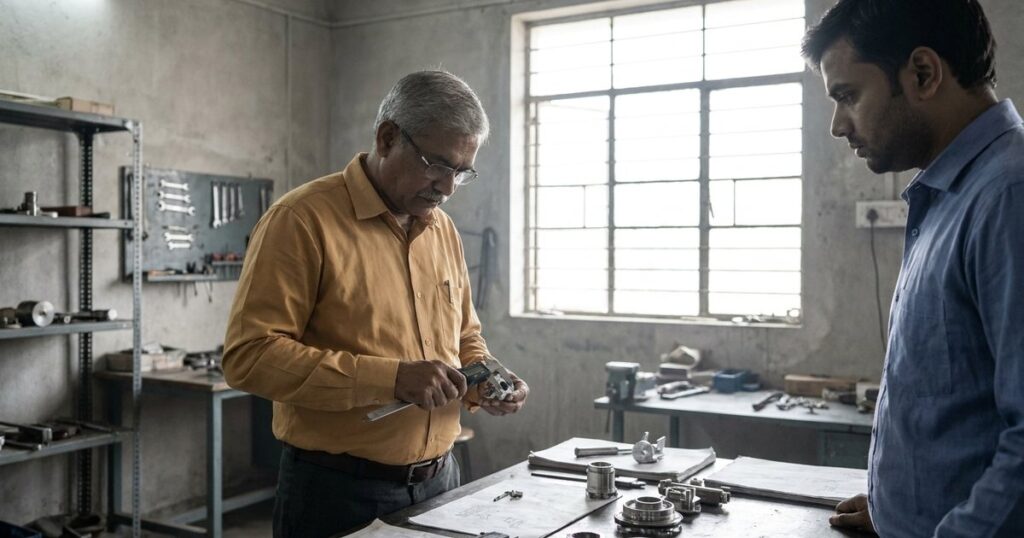

Indian startup engineer examining a prototype in a scene about sweat equity agreements
Insights

Sweat Equity Agreements in India

In India, sweat equity is not โ€œfree shares for helping outโ€. It is a regulated share issue under Section 54 of the Companies Act, 2013. It is generally available to a companyโ€™s directors or employees in exchange for know-how, intellectual property, or measurable value additionโ€”not to every consul…

Indian startup founders discuss product-market fit with an early customer in a business workspace
Insights

Product-Market Fit for Indian Startups: How to Know

In India, product-market fit is not when 10,000 people download your app. It is when a narrow group of customers keeps paying, stays, refers others, and does so without your founder personally pushing every sale. That is the practical meaning of product-market fit in India . If your growth stops …

Insights

ESOPs for Early Employees in India

ESOPs for early employees in India are not a substitute for salary, and they are not free money. They are a contract: you give an employee the right to buy shares later at a fixed price, subject to vesting, tax, and a liquidity event. Used properly, ESOPs help you hire people who can change the c…

Indian founder having a candid strategy discussion with two advisors in a bright startup office
Insights

Building an Advisory Board in India

Most Indian founders do not need an advisory board. They need two honest conversations, better customer data, and the discipline to act on uncomfortable feedback. An advisory board for a startup in India is useful only when it solves a specific problem that you cannot solve through hiring, custom…

Indian startup team reviewing paperwork and deadlines for a compliance calendar in warm office light
Insights

A Startup Compliance Calendar for India

Indian startup compliance is not a single annual filing. It is a recurring operating system: company law, income tax, GST, payroll, labour law, state registrations, data protection, and fundraising paperwork. Miss one deadline and you may pay a penalty. Miss the wrong one and you can lose an inve…

Indian startup founder entering a board meeting with directors in a modern office
Insights

Running Your First Board Meeting

Your first board meeting at an Indian startup is not a presentation ceremony . It is a working session to decide whether your company has enough cash, focus and evidence to earn the next six months. Run it badly and you get polite nods, irrelevant advice and a false sense of safety. Run it well a…

An exhausted Indian startup founder sits apart during a bright team meeting, illustrating founder burnout.
Insights

Founder Burnout in India: Signs and Fixes

Founder burnout in India is not a personal weakness. It is an operating failure that eventually appears in your numbers: slower product releases, bad hiring decisions, missed collections, angry customers and a fundraising story that no longer survives diligence. If you are sleeping badly, avoidin…

Two Indian startup founders test a prototype together while choosing a co-founder.
Insights

How to Pick a Co-Founder

Pick a co-founder the way you would pick a spouse, a senior hire, and a long-term business partner combined: slowly, with references, written agreements, and a trial under stress. Do not choose your college friend because you get along. Choose someone whose judgement you trust, whose skills cover…

Indian startup founders discuss revenue-based financing with a finance professional in an office.
Insights

Revenue-Based Financing for Indian Startups

Revenue-based financing in India is not a clever substitute for product-market fit. It is a repayment contract against revenue you already have. If your startup has predictable collections, healthy gross margins and a clear use for growth capital, it can fund expansion without selling equity. If …

Scroll to Top