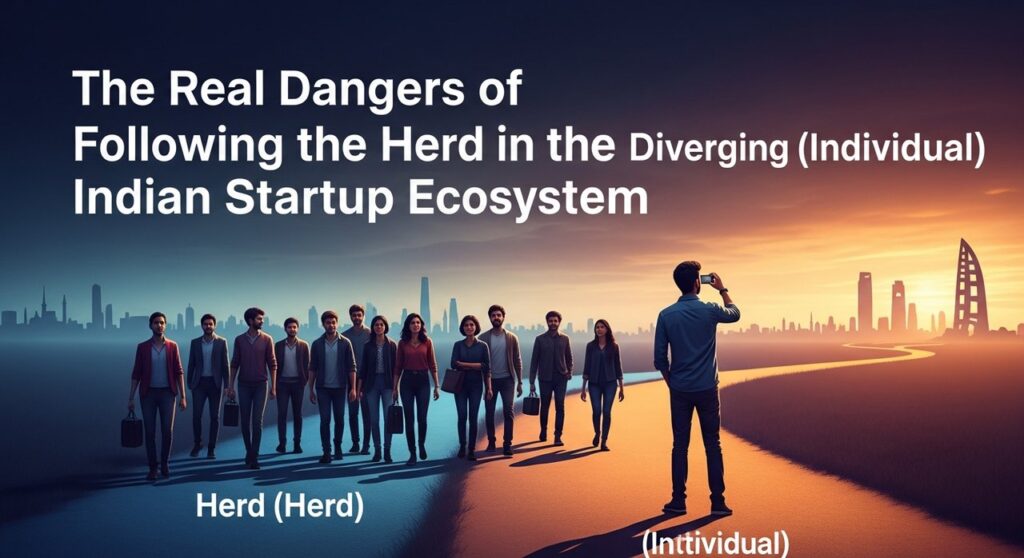
Chasing trends in the Indian startup scene is a surefire way to crash and burn. You might think that emulating what’s hot will land you a piece of the unicorn pie, but more often than not, it leads to a dead end. Look at the graveyard of startups that chased the same e-commerce dream post-Flipkart and failed to differentiate themselves. Let’s get real: following the herd isn’t just a mistake; it’s a ticket to irrelevance.
Why Imitation Kills Innovation
Copycat Syndrome
Too many Indian founders get seduced by the success stories of companies like Byju’s or Ola, thinking they can replicate the magic formula. What they don’t see is the iceberg beneath the waterline, the grit, the unique insights, and the sheer luck that played into their success. Mimicking these models without that insider edge leads to bland, uninspired offerings. Remember, the market doesn’t need another Paytm clone; it needs something new.
Funding Fads
Venture capitalists have their biases too, but chasing what’s trendy isn’t a reliable strategy. When everyone is lining up for the next hot sector, valuations get inflated, and competition becomes cutthroat. This herd mentality doesn’t just overvalue startups; it sets you up for a bubble that will inevitably burst, leaving you and your investors high and dry.
“The Indian startup ecosystem has over 100 unicorns, but how many are truly innovative rather than just opportunistically funded?”
The Real Battlefield: Execution
Differentiate or Die
Execution is where the wheat separates from the chaff. If you’re not bringing something distinct to the table, your startup is just noise. Look at Infra.Market, which carved out a niche in the B2B construction space by capitalizing on supply chain inefficiencies. They didn’t chase a trend; they identified a gap and filled it expertly.
Focus on Fundamentals
Your CAC, LTV, and churn rate are the real metrics that will determine your survival. If you’re spending more on acquiring customers than they’re worth, you’re digging your own grave. Focus on sustainable growth, not just capturing market share for the sake of it. A strong foundation will outlast any fleeting trend.
The Cost of Herd Mentality
Short-Term Gains, Long-Term Pain
Riding the wave of a startup trend might get you some initial traction, but what happens when the wave crashes? Startups that chase fads often find themselves struggling to pivot when the market shifts. By then, they’ve burned through cash and lost investor confidence. Your runway is too precious to gamble on trends that have a shelf life shorter than a political promise.
Brand Dilution
In trying to be everything to everyone, you risk becoming nothing to anyone. A clear, strong brand identity is your most potent weapon. Keep it sharp and focused, or you’ll dilute your value proposition to the point of invisibility. Remember, an inch wide and a mile deep beats a mile wide and an inch deep every single time.
Building a Culture of Originality
Encourage Risk-Taking
Innovation doesn’t come from playing it safe. You need a team that’s not afraid to experiment, fail, and iterate. In a country where failure is often stigmatized, creating a culture that encourages calculated risks can set you apart. Take a page from Captain Fresh, which ventured into uncharted waters in the seafood supply chain and disrupted a stagnant industry.
Empower Diverse Voices
Diversity in thought leads to groundbreaking ideas. By tapping into varied perspectives, especially from Tier-2 and Tier-3 cities, you’re not just ticking a diversity checkbox; you’re investing in a richer, more innovative future. Ignoring these talent pools is a mistake you can’t afford to make. Here’s why.
The Bottom Line
Following the herd in the Indian startup ecosystem is a losing strategy. It leads to oversaturation, inflated valuations, and ultimately, failure. The real path to success lies in identifying unique opportunities, executing flawlessly, and building a team and culture that embraces innovation. Don’t chase the unicorn; build something that stands out.
FAQs
Why is following startup trends risky?
Startup trends are often fleeting, leading to oversaturation in the market and inflated valuations. This can result in a bubble that eventually bursts, leaving startups financially vulnerable.
How can I differentiate my startup in a crowded market?
Focus on identifying unique opportunities and executing them well. Your startup should address unmet needs or inefficiencies rather than replicate existing solutions.
What role does culture play in fostering innovation?
A culture that encourages risk-taking and values diverse perspectives can lead to more innovative solutions. This is crucial in a landscape where failure is often stigmatized.
Why is it important to consider talent from Tier-2 and Tier-3 cities?
These talent pools offer diverse perspectives that can lead to innovative ideas. Ignoring them means missing out on potential breakthroughs that could set your startup apart.
For those founders who refuse to follow the herd and are eager to carve their own path, Malpani Ventures is here to guide you with seasoned insights and support.