In 2022, Carta counted 2,438 priced seed rounds. By 2025, that number had dropped to 1,494 — a 39% decline in just three years. And yet the total seed capital deployed barely moved: $8.1 billion still found its way into early-stage companies.
The math is uncomfortable. If fewer startups are getting funded but the same amount of money is going in, the average check size has grown — which means investors are getting more selective, not less generous. That’s a very different problem from what most first-time founders expect when they sit down to fundraise.
This is what Carta’s State of Startups 2025 — based on data from over 60,000 startups and 3,000 venture funds — makes clear. The rules of early-stage fundraising have quietly shifted. Here’s what actually changed, and what you can do about it.
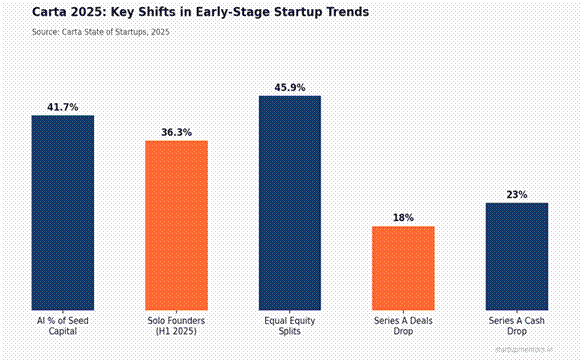
Image: Key percentage shifts in early-stage startup trends — Source: Carta State of Startups, 2025
What the Report Found
1. Fewer seed deals, same capital — the selectivity squeeze
Priced seed rounds fell from 2,438 at their 2022 peak to just 1,494 in 2025 — a 39% drop in deal count. But Carta’s platforms saw $8.1 billion deployed at the seed stage, holding relatively steady. The implication: investors haven’t pulled back their capital. They’ve pulled back their bets per deal — concentrating larger checks into fewer companies they’re highly convicted about.
The median post-money seed valuation climbed to $24 million in Q4 2025. Two years ago, getting to a $10M cap on a SAFE was a milestone. Today it’s baseline. At Series A, deal count was down 18% year-over-year while cash raised declined 23% — but valuations kept climbing, with a median of $78.7 million post-money. Fewer doors are opening, but the ones that do are opening wider.
2. Solo founders are rising — but underfunded
In H1 2025, 36.3% of new startups were founded by a single person. That’s up from 23.7% in 2019 — a 53% jump in the solo-founder share over six years. AI tooling is a big reason: founders can now build and ship much faster with fewer people from the start.
But here’s the catch: solo-founded companies received only 14.7% of cash raised in priced equity rounds in 2024. They’re starting more companies, but investors still systematically underfund them. If you’re a solo founder, you face a structural funding gap that doesn’t reflect your ability — it reflects investor risk bias. Understanding that distinction changes how you approach the fundraising conversation.
3. Teams are getting leaner — intentionally
The average seed-stage company now has 6.2 equity-holding employees, down from 10.3 at the 2021 peak. That’s a 40% reduction in average team size at funding. January 2025 saw the lowest startup hiring figure for any January in seven years, with just 28,299 new hires across Carta’s platform.
This isn’t a sign that startups are struggling — it’s a signal that founders are deliberately building lean teams, betting on AI to close the productivity gap. The “hire fast, hire big” playbook of 2021 is dead. The new model is hire slowly, hire precisely, and use AI to punch above your headcount.
4. After seed, founders still hold the majority — but the math compounds
Carta reports that after raising a seed round, the median founding team collectively owns 56.2% of their startup’s equity. That sounds healthy — and it is, compared to what equity often looks like by Series B. But equity erosion compounds quickly. Every SAFE, every bridge, every hire with meaningful stock options chips away at that number.
Interestingly, equal equity splits between co-founders are becoming more common: 45.9% of two-person founding teams divided equity equally in 2024, up from 31.5% in 2015. That shift points to changing views on fairness in early-stage teams — and it matters because the equity conversation you don’t have clearly today becomes a board-level problem tomorrow.
What This Means for Early-Stage Founders
The 39% drop in seed deals isn’t a doom signal — it’s a shift in what the game rewards. In 2021 and 2022, you could raise on a pitch deck and some momentum. The market was loose. 2025 is different: investors are allocating to conviction, not coverage. That means the threshold to get a meeting has risen, and the threshold to close a round has risen further.
For founders in India specifically, this matters because Indian early-stage rounds are catching up in valuations even as the global deal count tightens. You’re competing not just locally, but against a global backdrop of investor caution and higher bars. Even if you’re a pre-seed company in Bangalore, the context you’re raising in has materially changed.
The solo founder data is worth sitting with. If 36.3% of new startups are solo-founded, the “team” argument investors make as a reason to pass is starting to look like a proxy for something else — comfort, pattern-matching, or just habit. If you’re building solo, the right response isn’t to frantically find a co-founder to please investors. It’s to understand where the bias comes from and build your case around execution evidence: traction, velocity, product shipped. Here’s more on thinking through your fundraising strategy early.
The lean team trend is the most actionable signal in the report. Seed-stage companies averaging 6.2 equity holders means you should not be hiring your way to product-market fit. Every hire should be a high-conviction bet, not a response to anxiety about bandwidth.
And the equity data is a reminder that founders who don’t model their cap table carefully in the early days end up with a nasty surprise at Series A. 56.2% sounds like a lot. After another funding round, two ESOP pools, and a few key hires, it won’t be. Knowing your north star metric and your equity story at the same time is what turns a good pitch into a compelling one.
How to Apply This to Your Startup Right Now
Build an investor thesis, not just a pitch deck
When fewer seed deals are closing, you need investors to be convinced before they enter the room — not after the slide deck. Invest in your personal narrative: what do you know about this problem that others don’t, and why is now the right time? That’s the meta-context investors are pattern-matching for. Write a short “why me, why now” document before you start pitching and share it with a few trusted investors for honest feedback before you go wide.
If you’re a solo founder, lead with velocity
You won’t win the “team credibility” argument in the first meeting. Lead with what you’ve shipped, when you shipped it, and what it cost you. A solo founder who has built a product with 200 paying users is a different conversation from one who hasn’t yet started. Track your output metrics — product iterations per quarter, customer conversations per month, revenue velocity — and make them visible in your pitch and update emails.
Audit your hiring plan before raising
If you’re planning to hire 5 people post-seed, ask whether 3 people plus the right AI tools would get you to the same milestones. The market is rewarding capital efficiency. Show investors you’ve thought hard about headcount, not just growth. The founders raising confidently right now aren’t the ones with the biggest teams — they’re the ones who can explain exactly why every seat on their bus exists.
Model your cap table before your first SAFE closes
Use a free cap table modelling tool. Run the scenarios: if you raise a seed, then a bridge, then a Series A, what does the founding team own at each stage? You want to enter Series A negotiations with clarity, not regret. Carta’s own data shows that equal equity splits are rising — if you haven’t had the co-founder equity conversation clearly, have it now. A difficult 30-minute conversation is better than a contentious board meeting two years later.
Target investors already active in your sector
With AI capturing 41.7% of all seed capital, sector-focused bets are driving deployment. Generalist approaches to fundraising work less well when investors are concentrating capital. Research which funds have written checks in your specific category in the last 12 months and prioritise them. A warm intro to a sector-focused investor is worth 20 cold emails to generalists.
Conclusion
Carta’s 2025 data paints a picture of an ecosystem that is maturing in real time. Fewer but larger seed deals. Leaner teams. More solo founders. Persistent equity concentration at the top. These trends don’t favour the passive founder who’s waiting for conditions to improve. They favour founders who understand exactly where the bar is and build to clear it — not sprint past it.
The startup market isn’t broken. It’s just more honest than it was in 2021. The data is there. Now build accordingly.