
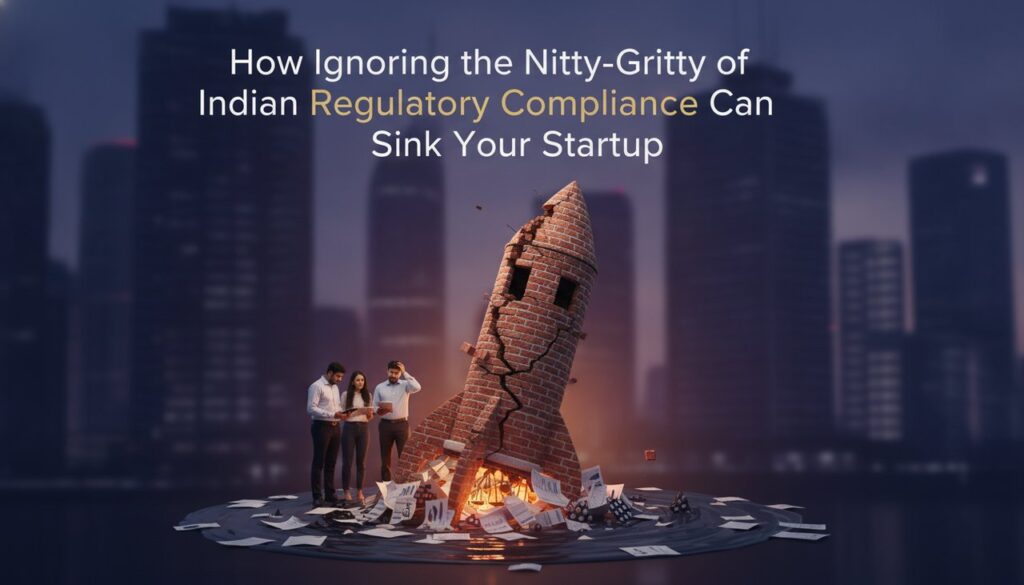
Regulatory compliance isn’t the sexy part of running a startup, but ignoring it could be the iceberg that sinks your ship. In the Indian startup scene, where the regulatory environment is complex and ever-evolving, non-compliance can not only incur hefty fines but also lead to business shutdowns. The harsh reality is, no matter how groundbreaking your idea is, overlooking the nitty-gritty of compliance can spell disaster. Let me be blunt: most founders are too busy chasing investors and refining their product to care about this until it’s too late.
The Unseen Dangers of Non-Compliance
Why It Matters More Than You Think
Imagine you’ve just closed a ₹5 crore seed round. You’re on track to scale, your burn rate is healthy, and then, boom, a notice lands on your desk. It’s a compliance issue, and now you’re staring at fines or worse, a business shutdown. This isn’t scare-mongering; it’s a reality many have faced, including prominent startups like Stayzilla, which faced legal challenges that halted their operations.
Company Structure: The First Compliance Hurdle
Choosing the wrong legal structure can be a fatal error. A Private Limited Company, for instance, demands rigorous compliance with the Companies Act, 2013. Annual filings, maintaining statutory registers, and issuing share certificates are not optional. Mess these up, and you’ll face operational inefficiencies and potential legal problems.
Taxation and GST: The Silent Cash Drain
Think you can delay filing your GST returns? You’re setting yourself up for penalties that can bleed your startup dry. According to experts like Sharath Shyamasunder from The Startup Zone, integrating accounting software for automatic tax calculations is a must. The cost of non-compliance in this area can be crippling.
Regulations: Your Secret Weapon, Not Just a Shield
Investors Love Compliance
Here’s a twist: compliance can be your ace in the hole. Investors in India don’t just look at your market potential; they dig into your compliance records. A clean slate not only lowers perceived risks but also makes you a more attractive investment. It’s a signal of professionalism.
Intellectual Property: Protect It or Lose It
Your ideas are your currency. Without proper IP protection, you’re leaving money on the table. Patents, trademarks, and copyrights don’t just protect your innovations; they increase your startup’s valuation. It’s a crucial step that many overlook until it’s too late.
Sector-Specific Regulations: Know Them Inside Out
If you’re in a regulated sector like fintech or healthtech, the stakes are higher. RBI and SEBI regulations aren’t just paperwork; they are guardrails that, if ignored, can halt your operations. The cost of non-compliance here isn’t just monetary; it’s existential.
Staying Ahead of the Regulatory Curve
Proactive Measures to Avoid Pitfalls
Waiting for a compliance notice to land on your desk is like waiting for an iceberg to melt on its own. Engage legal advisors who specialize in your sector. Regular compliance audits are not optional; they are your lifeline.
Leverage Technology
Digital platforms can be a godsend for managing compliance. HR software can automate employee benefit tracking, ensuring you adhere to labor laws. The right tools can save you from costly mistakes.
Internal Audits: More Than Just a Checklist
Conduct frequent internal audits to ensure your compliance framework is robust. Maintain detailed records of all agreements, contracts, and licenses. These aren’t just for your peace of mind; they are essential during regulatory inspections and investor due diligence.
Ignoring compliance is a luxurious gamble you cannot afford. Make it a core strategy, not a side quest.
The Bottom Line
Ignoring Indian regulatory updates is not just risky; it’s a surefire way to sink your startup. Compliance isn’t just about avoiding penalties; it’s about building a robust foundation for sustainable growth. If you’re serious about scaling, make compliance a core part of your strategy.
FAQs
Why should I care about compliance if my startup is still small?
Compliance is crucial from day one. Early compliance sets a strong foundation, making scaling smoother and attracting investors who value risk management.
How can I stay updated with regulatory changes in India?
Subscribe to industry-specific newsletters, engage with a legal advisor, and participate in startup forums. These channels provide timely updates on regulatory changes.
Can non-compliance affect my ability to raise funds?
Absolutely. Investors conduct thorough due diligence, and a history of non-compliance can derail your funding prospects. A clean compliance record is essential for investor confidence.
At Malpani Ventures, we believe in mentoring founders through the maze of compliance. Reach out if you’re ready to make regulatory adherence a strategic advantage.