
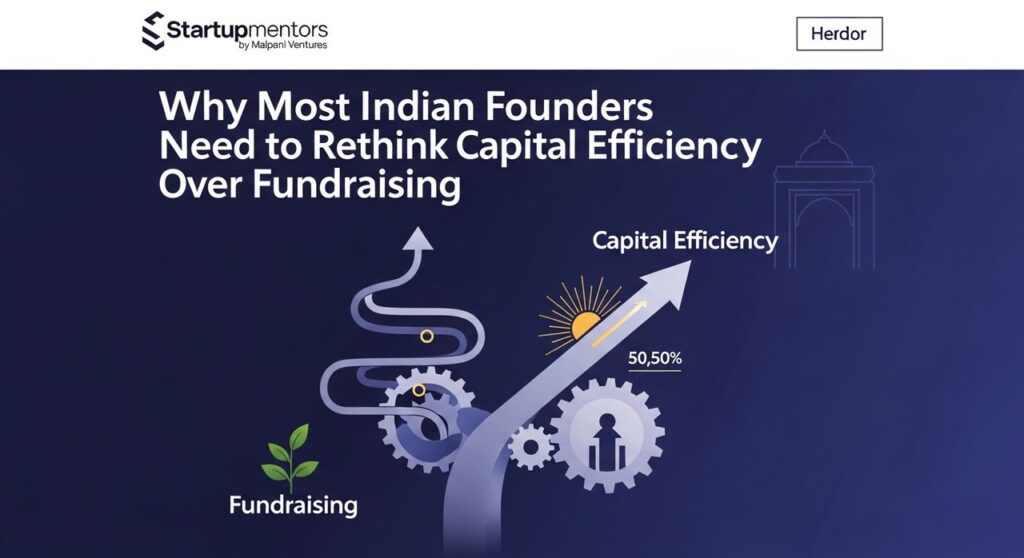
Here’s a cold, hard truth: Most Indian founders today are obsessed with fundraising, believing it’s the magic bullet to startup success. But have you ever considered that raising capital too early might be your startup’s downfall? You’re probably thinking, “More money means more growth.” Wrong. It’s time to rethink capital efficiency and realize that a bloated bank balance could be more of a burden than a blessing.
Why Raising Too Much, Too Early, Is a Trap
The Illusion of Security
When you have a hefty sum sitting in your bank account, it’s easy to feel secure. But this illusion often leads to complacency. Many founders lose the urgency to validate their product in the market. Instead of scrapping for every rupee and perfecting their offering, they burn cash on unnecessary hires, fancy offices, and marketing stunts that don’t move the needle.
Pressure to Scale
Investors aren’t giving you money for charity. They expect returns, and quickly. This often translates into pressure to scale prematurely. Scaling without product-market fit is like putting the cart before the horse. You might gain users, but are they sticking around? The pressure to show growth can lead to inflated metrics that look good on paper but don’t translate to sustainable business.
Loss of Control
Every time you raise funds, you dilute your ownership. The more capital you raise, the less control you retain over your startup. Decisions you once made freely now have to be vetted by a board of investors. If your vision doesn’t align with theirs, you’re in for a rough ride.
“Raising funds too early can dilute not just your equity, but your vision.”
The Case for Capital Efficiency
Focus on Core Metrics
Capital efficiency forces you to focus on core business metrics. Instead of vanity metrics like downloads or website traffic, you zero in on customer acquisition cost (CAC) and lifetime value (LTV). This stark focus on essentials often drives innovation and leads to more sustainable growth.
Building a Lean Operation
A lean team is an agile team. It forces you to prioritize tasks and resources. This doesn’t mean cutting corners but rather maximizing output with minimal input. A lean operation is often more adaptive to market changes and can pivot without burning through cash.
Validating Product-Market Fit
When every rupee counts, you’re forced to scrutinize each expense. This scrutiny often translates into a sharper focus on achieving product-market fit before scaling. You only invest in customer acquisition once you’re confident in customer retention. It’s about building a product that users love before trying to sell it to the masses.
Examples from the Indian Startup Scene
OfBusiness
Look at OfBusiness. They focused on capital efficiency and reached profitability before raising large rounds. Their disciplined approach to capital allowed them to grow sustainably without the pressure of immediate high returns.
Zetwerk
Zetwerk, a B2B marketplace, exemplifies capital efficiency. By focusing on operational efficiency and customer value, they grew their business before seeking external capital. This approach allowed them to maintain control and scale effectively.
The Bottom Line
Forget about how much money you can raise. Focus on how well you can use what you already have. Capital efficiency isn’t just a strategy; it’s a mindset. Master it, and you’ll not only attract the right investors but also build a business that’s truly sustainable. More money might solve today’s problems, but efficiency builds tomorrow’s success.
FAQs
Why is capital efficiency important in India?
In India, the market is diverse and competitive. Capital efficiency ensures you can adapt and scale sustainably without falling prey to the startup hype cycle.
How can I measure capital efficiency?
Track metrics like CAC, LTV, and payback periods. These indicators help you understand how efficiently you’re using capital to grow your business.
What are the risks of raising funds too early?
Raising funds too early can lead to loss of control, pressure to scale prematurely, and dilution of your vision and equity.
Can focusing on capital efficiency lead to slower growth?
Initially, yes. But it’s about sustainable growth. Efficient use of capital ensures that your growth is based on solid foundations, not just cash burn.
In the end, it’s not about how much you raise but how wisely you use it. If you’re ready to build a capital-efficient startup, Malpani Ventures can provide the mentorship and investment guidance you need. Reach out if you’re serious about building a business that lasts.