Most founder–investor blow-ups don’t happen because either side is malicious.
They happen because expectations live in people’s heads instead of on paper.
Founders assume investors will be patient.
Investors assume founders will stay rational under pressure.
Both assumptions break the moment stress, dilution, or a bad quarter shows up.
After watching enough startups fail despite good products and smart people, one pattern becomes obvious: capital deployed without alignment is more dangerous than no capital at all.
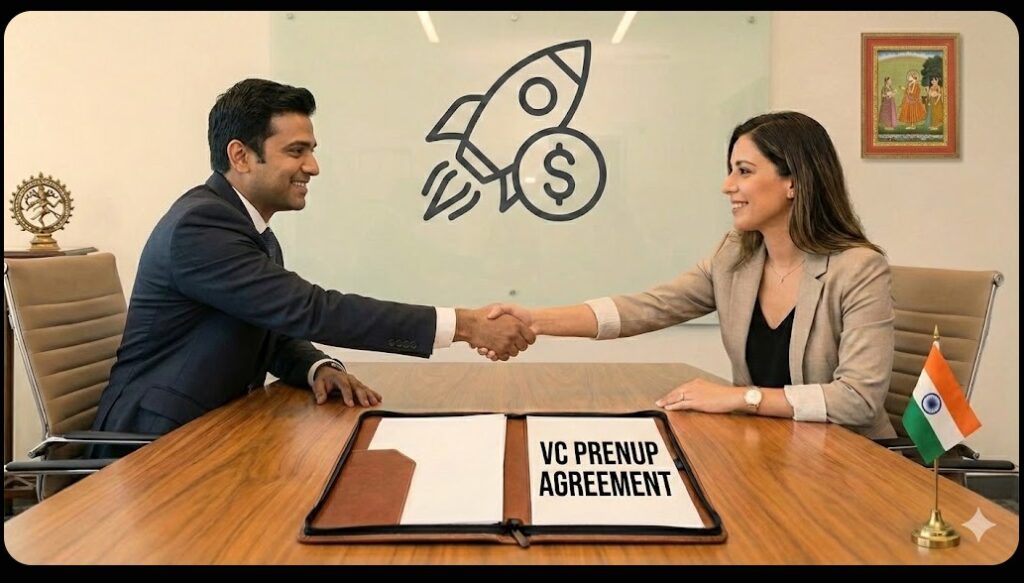
This VC Prenup is not a legal document. It’s a behavioural contract.
It defines power, protection, conduct, and break-up rules before money enters the system—when everyone is still calm, optimistic, and reasonable. It forces uncomfortable conversations early: control, exits, dilution, founder failure, investor overreach, ethics, and what happens when trust cracks.
If you’re a founder, this protects you from silent control creep and reputational damage.
If you’re an investor, this protects you from governance drift and capital misuse.
If you’re both serious, this document protects the company.
Think of it as a seatbelt: you don’t need it until you really, really do.
Use it. Modify it. Argue over it.
Just don’t raise capital without alignment and hope it works out.
Here’s a draft to help you out
Founder–Investor Alignment & Governance Charter
Date: ___
Company: ___
Founder(s): ___
Investor(s): ___
This document defines power, protection, behaviour, and break-up rules before capital deployment.
SECTION 1 — PHILOSOPHY
Both parties agree:
- This is a high-risk partnership
- Capital without trust fails
- Control without accountability destroys companies
- Ego is more dangerous than competition
- When conflict happens, this document overrides memory
SECTION 2 — FOUNDER COVENANTS (Non-Negotiable)
Founder commits:
Integrity
- No misrepresentation of traction, revenue, users, or metrics
- No related-party siphoning
- No hidden debt or liabilities
- No shadow cap table
Commitment
- Full-time dedication (unless disclosed)
- No competing ventures
- No silent co-founders
Governance Discipline
- Maintain clean accounts
- Monthly reporting discipline
- Maintain statutory compliance
- Maintain IP ownership in company
Financial Discipline
- No reckless burn
- No ego hiring
- No vanity offices / PR spending
- Salary capped until profitability / Series A (define)
Trigger for Investor Protection if breached.
SECTION 3 — INVESTOR COVENANTS
Investor commits:
- No operational interference
- No founder humiliation / public criticism
- No forcing unnatural growth
- No pushing premature exit
- No investor cartel behaviour
- No replacing founder unless governance breach
- Provide strategic support when requested
Investor = partner, not controller.
SECTION 4 — POWER MAP (Who Controls What)
| Area | Authority |
| Daily operations | Founder |
| Hiring CXO | Founder + Board |
| Budget approval | Board |
| Fundraising | Board |
| Pivot | Board |
| M&A | Supermajority |
| Shutdown | Supermajority |
| Founder removal | Extreme breach only |
| ESOP pool change | Board |
SECTION 5 — FOUNDER VESTING & SKIN IN THE GAME
- Founder equity vests over 4 years
- 1-year cliff (or define)
- If founder leaves early → Unvested equity returns to company
- Reverse vesting applies
- No free equity
Bad Leaver vs Good Leaver
Bad Leaver
- Fraud
- Abandonment
- Criminal misconduct
- Governance breach
→ Forfeits most equity
Good Leaver
- Health
- Mutual separation
- Strategic change
→ Keeps vested equity
SECTION 6 — CAPITAL PROTECTION RULES
- Use of funds restricted to agreed business plan
- Founder cannot:
- Take loans without approval
- Issue shares secretly
- Alter cap table without consent
- All fundraising disclosed early
- Anti-dilution terms clarified upfront
SECTION 7 — REPORTING DISCIPLINE
Founder provides:
Monthly:
- Cash runway
- Revenue
- Burn
- Hiring
- Key risks
Quarterly:
- Strategy review
- Unit economics
- Market changes
- Competitive threats
No surprises. Ever.
SECTION 8 — EXIT PHILOSOPHY ALIGNMENT
Define:
- Expected horizon: ___ years
- Exit type preference:
- IPO / Strategic / Secondary / Acquisition
- Minimum return expectation: ___
- No forced exit unless:
- Fraud
- Founder abandonment
- Governance collapse
SECTION 9 — TOXICITY PROTECTION (Both Sides)
If Founder becomes dysfunctional
- Stage 1: Coaching
- Stage 2: Governance supervision
- Stage 3: Leadership restructure
- Stage 4: Replacement (last resort)
If Investor becomes destructive
- Structured mediation
- Investor buyback / secondary
- Board intervention
No silent sabotage allowed.
SECTION 10 — DILUTION & FUTURE FUNDING RULES
Both acknowledge:
- Future dilution inevitable
- Down rounds possible
- No emotional reaction to dilution
- Pro-rata rights defined
- Follow-on rights clarified
SECTION 11 — INFORMATION & TRANSPARENCY
Investor has rights to:
- Financial records
- Cap table
- Legal filings
- Major contracts
- Compliance records
But no operational micromanagement.
SECTION 12 — FOUNDER PSYCHOLOGY RISK CLAUSE
Founder agrees to disclose:
- Burnout / breakdown risk
- Loss of motivation
- Health issues affecting leadership
Investor agrees:
- Support first, not punish
- Replace only if company survival threatened
SECTION 13 — ETHICS & ZERO-TOLERANCE
Immediate trigger if:
- Fraud
- Fund misuse
- Cap table manipulation
- Harassment / misconduct
- Legal violations
- Reputation damage
SECTION 14 — DISPUTE RESOLUTION
Sequence:
- Honest conversation
- Neutral mediator
- Board review
- Arbitration (India jurisdiction)
No courtroom drama unless unavoidable.
SECTION 15 — CONFIDENTIALITY & TRUST
- No leaking internal matters
- No reputational harm
- No founder-investor cold wars
Startups die silently from mistrust — not competition.
SECTION 16 — THE REALITY CLAUSE
Both parties acknowledge:
- Startups are emotionally violent
- Bad quarters will happen
- Fear, ego, and stress will rise
- Long-term trust matters more than short-term outcomes
SIGNATURES
Founder: __________
Investor: __________
Date: __________